
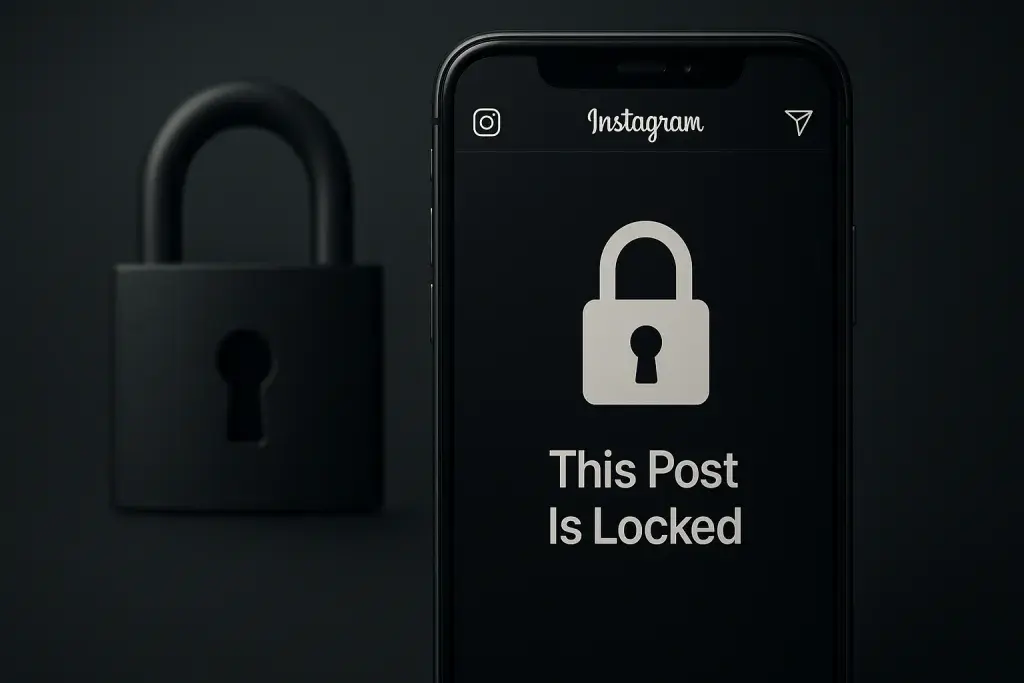
A padlock icon quietly appearing next to a photo has become one of the more unusual sights on Instagram in recent months. It's not a glitch, and it's not a privacy setting you've accidentally triggered. It's part of a deliberate shift in how the platform is letting people control who sees what, and when. For some users, it feels like a welcome layer of protection. For others, it's an odd interruption to the free-flowing, public nature of the app they've used for over a decade.
The confusion is understandable. Instagram has introduced dozens of features over the years, and not all of them stick around. But locked posts touch something more fundamental than a filter or a sticker - they affect visibility, access, and control, three things creators and casual users alike care about deeply. If you've been trying to figure out why some content behaves differently than usual, or you're weighing whether this feature fits your own posting habits, you're not alone. Many creators already juggle multiple growth tactics, from posting consistency to exploring how to boost instagram post without paying, and a new access-control feature adds yet another variable to that equation.
This instagram locked posts guide walks through the concept from the ground up: what it actually means, how it functions in practice, and where it currently stands as Instagram continues to test and expand it. By the end, you'll have a grounded, practical understanding of the feature - not just what it is, but whether it deserves a place in your own Instagram strategy.
What Is Instagram Locked Posts? Understanding the Basics
At its core, a locked post is content that Instagram restricts from general public view, even though it technically exists on a user's profile. Unlike a fully private account, where every post is hidden from non-followers, a locked post applies restrictions selectively - to a single piece of content rather than an entire account. This means someone could run a public profile with mostly open posts, then lock a specific photo or video so that only an approved group can see it.
It's easy to confuse this with existing privacy tools Instagram already offers, but the mechanics are distinct. A private account blocks all non-followers from seeing anything. A close friends list, used mainly for Stories, lets you choose a smaller audience for temporary content. Locked posts, by contrast, apply to permanent feed content and give the poster granular control over a single upload, independent of their overall account settings.
- Private account: restricts the entire profile from anyone who isn't an approved follower.
- Close friends list: limits Stories (not feed posts) to a hand-picked group, usually temporary.
- Locked post: restricts one specific feed post while leaving the rest of the profile visible as normal.
Consider a small creator who runs a public account for general audience growth but wants to share an early product photo only with paying subscribers or a loyalty group. Instead of switching their whole profile to private, they can lock that single post, keeping everything else visible to the public.
How Instagram Locked Posts Work: A Step-by-Step Explanation
Understanding the mechanics matters just as much as understanding the concept. Locking a post isn't a passive setting - it requires a deliberate choice at the point of publishing, and the options available determine exactly who gets access afterward.
- Create the post as usual, selecting the photo, video, or carousel you want to share.
- Before publishing, open the audience or privacy settings specific to that post.
- Choose the restriction level - for example, limiting visibility to followers only, a specific list, or approved subscribers.
- Confirm the settings and publish the post, which will now display a lock indicator to users outside the approved audience.
- Monitor engagement and, if needed, adjust who has access later through the post's settings menu.
For someone outside the approved group, a locked post typically shows a visual cue - a lock icon layered over a blurred or partially hidden thumbnail - rather than disappearing entirely from the feed or profile grid. This design choice matters: it tells outsiders that content exists without granting them access, which can spark curiosity rather than simply hiding the fact that something was posted at all.
One common mistake is assuming the lock setting applies retroactively to old posts. In most implementations tested so far, the restriction has to be set at the time of posting rather than added afterward, so planning ahead is essential if you want to use this feature intentionally.
The Good: Benefits of Locked Posts for Users and Creators
The appeal of locked posts becomes clear once you consider how much unwanted redistribution happens on Instagram. Screenshots, reposts, and unauthorized shares are common frustrations for creators, and a locked post reduces the surface area for that kind of leakage by narrowing who can view the content in the first place.
- Greater control over sensitive or personal content without giving up a public profile entirely.
- Reduced risk of content theft or unauthorized reposting, since fewer people have direct access.
- Stronger sense of exclusivity for loyal followers, subscribers, or close friends.
- Less pressure to perform for a mass audience on every single post.
- New tools for creators experimenting with tiered content, such as previews for select groups before a wider release.
Small businesses testing new products often want feedback from loyal customers before a public launch. Locking a preview post lets them share early access with that specific audience while keeping their main feed focused on finished, polished content. Similarly, a photographer might lock a raw, behind-the-scenes shot for close collaborators while saving the final edit for public release.
The Bad: Drawbacks and Risks of Locked Posts
Every access restriction comes at a cost, and locked posts are no exception. The most immediate concern for creators is reach. Instagram's discovery systems favor content that generates broad engagement, and a locked post - by definition - limits who can even see it, let alone like, comment, or share it.
Casual followers can also find the experience confusing or mildly frustrating. Seeing a lock icon without understanding why access was denied may come across as exclusionary, especially if the restriction wasn't clearly explained in a caption or bio. For creators who rely on consistent, predictable engagement metrics, unpredictable visibility swings caused by locked content can complicate how they read performance data.
| Aspect | Benefit | Drawback |
|---|---|---|
| Content protection | Reduces unauthorized screenshots and reposting | Doesn't fully prevent access by approved viewers who screenshot anyway |
| Audience reach | Encourages a loyal, engaged inner circle | Limits exposure to new or casual followers |
| Engagement metrics | Higher engagement rate among the approved audience | Lower overall numbers, which can distort performance comparisons |
| Follower experience | Feels exclusive and special for included users | Can feel alienating or confusing for excluded followers |
A creator hoping to reach a broad audience with a launch announcement, for instance, could accidentally undercut their own visibility by locking the post to a smaller group, only to realize afterward that the intended reach never materialized.
Instagram Locked Posts Latest Updates and Rollout Details
Instagram has historically introduced access-control features in phases, starting with limited testing among select accounts before expanding availability more broadly. Locked posts appear to be following that same pattern, with early access concentrated among certain creator and business accounts rather than being available to every user simultaneously.
Official statements from Instagram have framed the feature as part of a broader push to give users more nuanced control over their content, echoing similar reasoning behind earlier changes like hidden like counts or restricted comment sections. As with those previous rollouts, adoption has been gradual, and functionality has shifted slightly based on user feedback during testing phases.
- Initial testing phase limited to a smaller group of accounts, often creators or business profiles.
- Gradual expansion based on feedback about usability and audience reaction.
- Public availability typically follows once major bugs and confusing interface elements are addressed.
Because Instagram frequently adjusts features based on real-world use, the current version of locked posts may look different in a few months than it does today. Anyone relying on this feature for a specific campaign or announcement should check their own account settings directly rather than assuming availability based on what others report seeing.
What to Expect Next: Practical Tips for Using Locked Posts Wisely
Deciding whether to use locked posts comes down to matching the feature to the right kind of content. Not every post benefits from restricted access, and using it indiscriminately can undercut the very engagement creators are trying to build.
- Use locked posts for exclusive previews meant for a smaller, loyal audience rather than general announcements.
- Reserve the feature for sensitive content you want to share carefully, such as personal updates or early drafts.
- Avoid locking posts meant to drive broad awareness, since restricted visibility works against that goal.
- Always explain the restriction in a caption or story so followers understand why access is limited.
- Revisit locked content periodically to decide whether it should eventually be made public.
A practical example: a musician teasing an unreleased track might lock a short clip for subscribers only, building anticipation before a full public release. That kind of staged rollout can work well precisely because the restriction has a clear purpose and a defined endpoint, rather than being applied permanently or without explanation.
Questions and Answers
Can someone see a locked Instagram post if I send them the direct link?
Generally, no. Access restrictions are tied to account permissions rather than the link itself, so sharing a URL doesn't bypass the approved audience list. The viewer still needs to meet whatever criteria the poster set, such as being a follower or belonging to a specific group.
Does locking a post hurt my overall Instagram reach or algorithm performance?
It can, since restricted content reaches fewer people by design, and Instagram's discovery systems tend to favor posts with broader engagement. Locking content is best reserved for situations where limited reach is intentional rather than a byproduct you're trying to avoid.
Is the locked posts feature available to every type of Instagram account?
Availability has varied during testing, with creator and business accounts often gaining access before personal accounts. Checking your own account's post settings directly is the most reliable way to confirm whether the option currently exists for you.
Can I unlock a post after I've already restricted it?
In most cases, yes, though the process may vary depending on how Instagram has implemented the setting at any given time. Adjusting the audience after publishing typically updates who can view the content going forward, without needing to repost it.
How is a locked post different from using the close friends list?
The close friends list is designed for Stories and tends to be temporary, disappearing after 24 hours unless saved separately. Locked posts apply to permanent feed content, giving creators long-term control over a specific piece of content rather than short-lived visibility.
Will locked posts eventually replace private accounts or close friends lists?
That seems unlikely, since each tool serves a different purpose. Locked posts offer selective control over individual pieces of content, while private accounts and close friends lists manage broader, ongoing audience segmentation, meaning all three can reasonably coexist.
